With the fall of Google Reader now in the distant past, technologically speaking, I'm not sure if anyone will see this auld blog's resurrection post. But the blog and its readers have come to my mind often in the two years and some since my last post. Some updates seem merited.
* * *
Bella joined our family at New Year's, 2016.
She's a loyal, sensitive, somewhat crotchety little papillon, now about six years old. All she wants out of life is lap time, a woolly squeaking toy, a stranger-free household, and to be served her own plate of meat and cheese and potatoes at every meal. It hardly seems too much to ask.
* * *
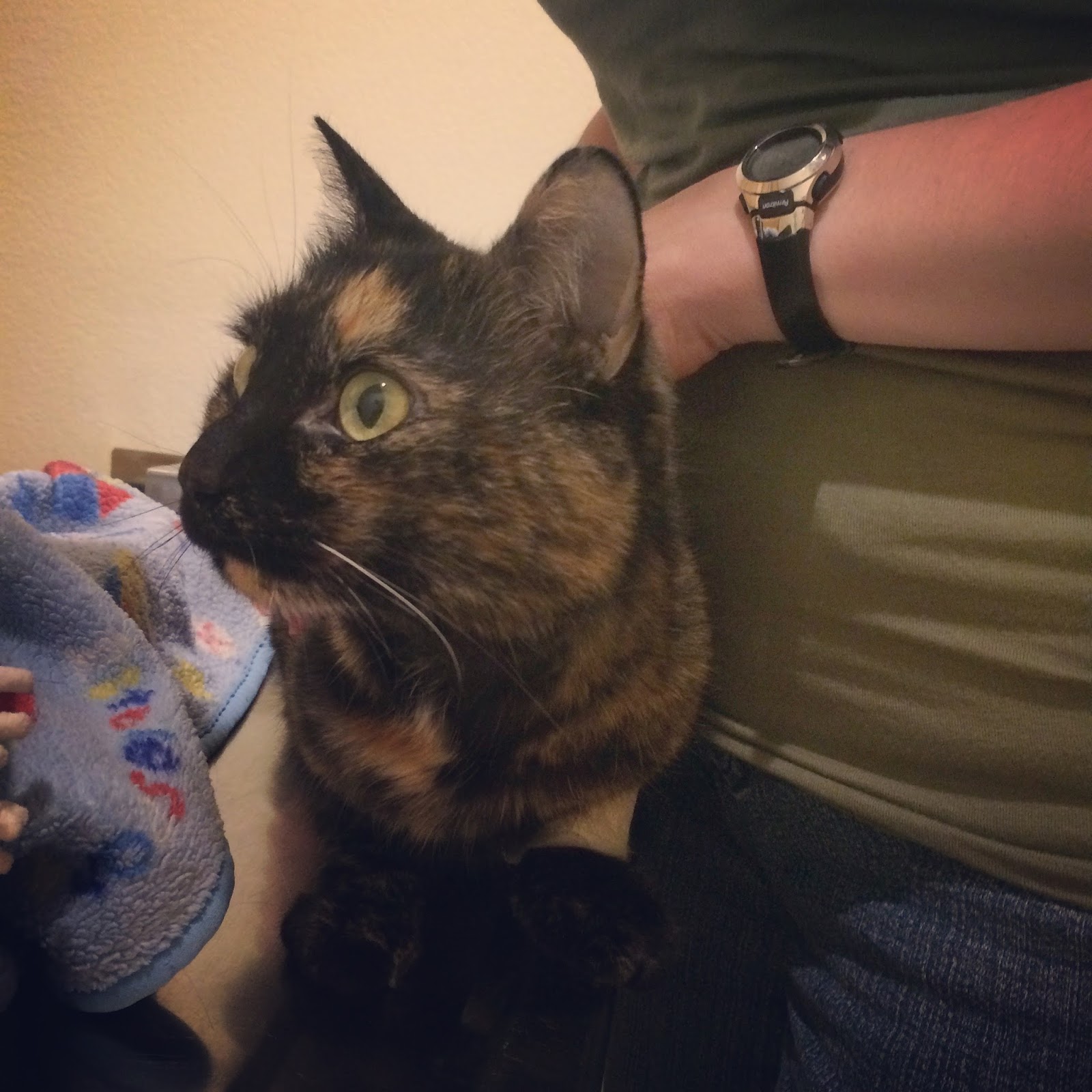
We lost Maia to feline leukemia virus this summer, at age seven.
Rest well, kitty.
My houseplants are healthier, but I miss her regularly. It feels strange to be able to leave rubber bands out on the counter and have a vase of flowers on the dining table without expecting a mess.
* * *
The best surprise of my life came into the world this past spring.
Learning each other's faces.
I spent two weeks in the hospital, and then she spent four in the NICU after an early delivery, but we have long been home and healthy. She is now ten months old and on the point of crawling--active, alive, curious, precious.
Long-term, I'm not comfortable posting pictures of her; it's a question of consent for me, and also of safety. I'm also not posting her name on my public accounts. But baby pictures are such wonderful things....
* * *
And one more big change: this coming spring, we're moving nearly all the way across the country. Our destination is a little Ohio town not far from Pittsburgh, further east and further south than I've lived since I was seven years old.
I love the Pacific Northwest. I never thought I'd leave. But it's good to know that at forty, I'm still up for choosing life-altering adventures.
Yep, I just turned forty. And I'm so not giving up my pigtails.
* * *
In various news:
I'm halfway through college, now, and to my liberal arts major I've added minors in anthropology and ASL.
I participated in and won NaNoWriMo again, just this past year, and immediately had to trash basically everything I'd written. But it was still a thoroughly happy and sometimes cathartic experience.
Bullet journaling and mindfulness practice are making beautiful alterations in my life.
I've gotten into sustainability and minimalism and am cheerfully bungling my way through mending knit shirts with cloth flowers cut from old pajama pants at the moment. #nailedit
As was broadly hinted in previous posts, I have some different perspectives from what I had when I blogged here regularly. Having been smashed in the face by how much I don't know, however, I've become a bit less mouthy with my opinions. At least, I think I have. You all can be the judges. The necessary honesty of blogging means that changes will naturally make themselves known, over time, of course.
I hope to post more. Blogging has fallen out of favor with the rise of the social media giants, but mindfulness is pushing me away from the Twittery kind of thing and back toward long-form writing and more personal communities. Also, Masha blogs all the time, which makes me jealous! But in between times, I can also be found in the following places:
Scratch Paper Book Reviews, my book-review Instagram account, where I write reviews on scraps of paper otherwise destined for the recycle bin
My personal Instagram, where I sort of mini-blog and will continue to post baby pics till baby is about a year old
Twitter, where I let my new perspectives stretch their legs and run around a little
Maybe someday I'll even manage to get my Goodreads up and running again....
* * *
Redesign coming! Apologies for the messy sidebar in the meantime.
Sometimes, in between trying to decide which class to prioritize on any given day and pestering grad student teaching assistants for assignment details, I really miss blogging.
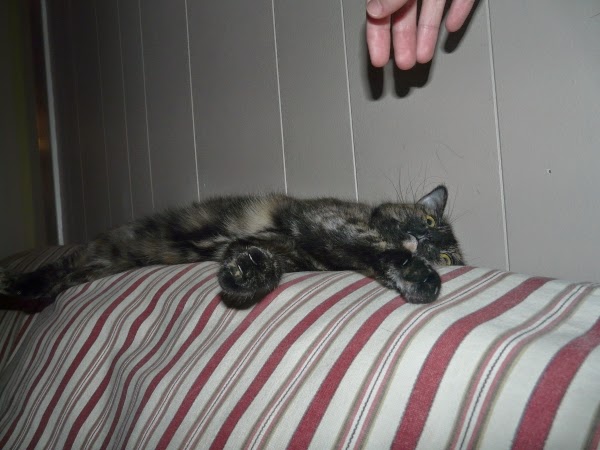
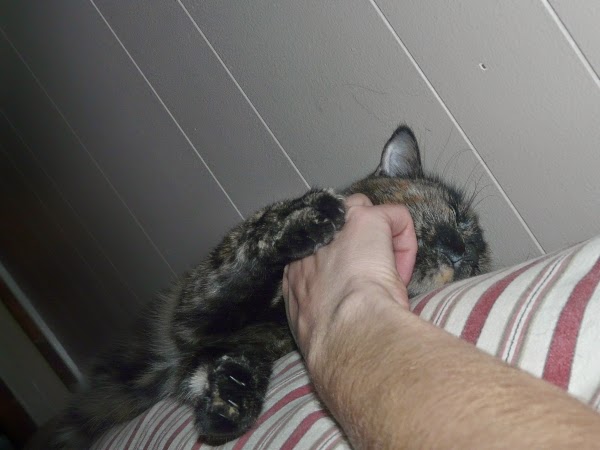
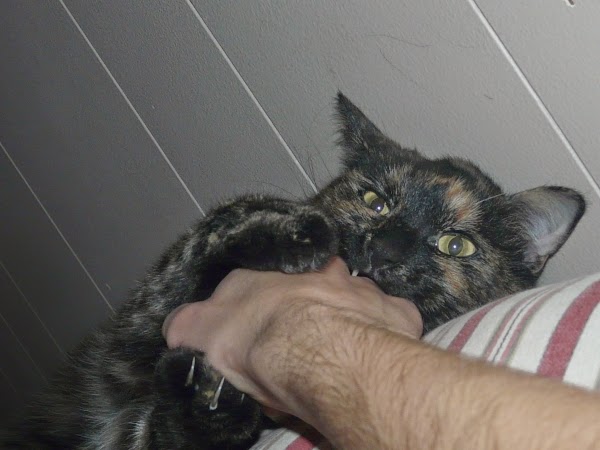
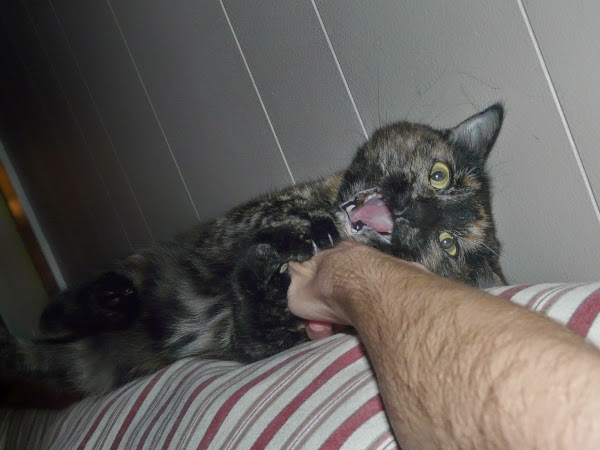
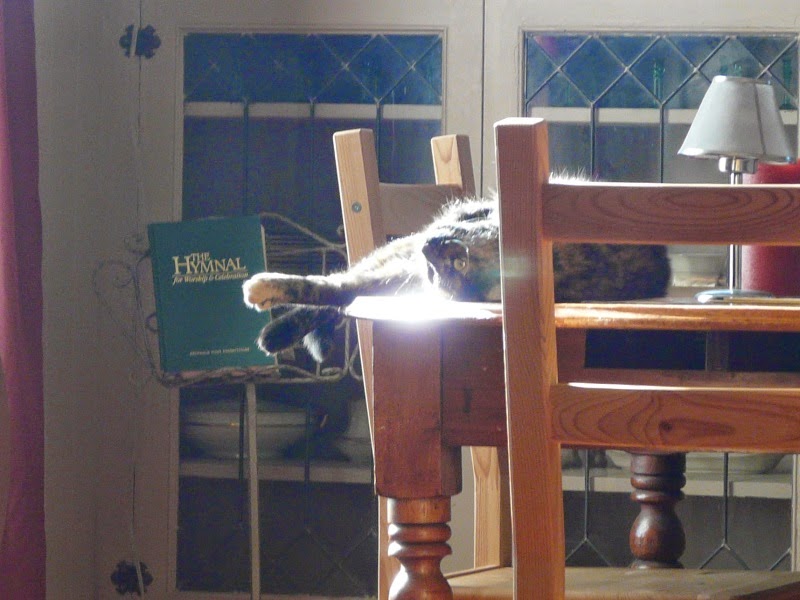
You may have missed the cat pictures.
Maia hasn't changed much.
There's more going on in my head and heart and life at any given moment these days than I can possibly settle into neat blog posts. It's good, stressful, beautiful, exhausting, painful, necessary, and it sometimes results—when I do manage to post—in dreadful vaguebooking. Sorry about that. Some of it is that all too often when I feel like I have things to say now, I can't scrape together the right words, and it isn't my voice that needs to be heard.
I do have to say, though, I love school. Going by distance is hard. Going while working is hard. Going with a largely uniform student body, so that it's often me and perhaps one other person in the class who are different, is hard. But my professors are fantastic. The teachers and advisers and administration are accessible and helpful. As for the classes, so far they always teach me something that helps bring light and warmth into the great aching vacuum in my chest that's trying to fill itself with understanding.
I went on a road trip this spring and got this close to campus.
This is just outside of Ogden; USU is in Logan.
Someday I'll make it all the way there; I hear their ice cream's great.
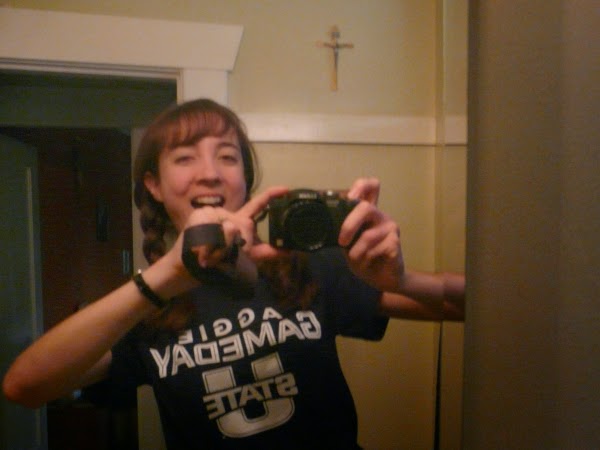
In the meantime, I'm rocking an Aggie sweatshirt.
* * *
My friend Bekah gave me the gift of a meet-and-greet with Pentatonix this summer in Seattle:
In case you can't tell from the smiles, I was excited,
and they rock.
The concert was pretty incredible. I yelled and cheered like a twelve-year-old. Also, like a thirty-seven-year-old: they were touring with Kelly Clarkson, and I knew all her early music and none of the new stuff. As it turns out, age has not made me too dignified to stand up and dance and sing along.
* * *
You guys. I got to MEET them.
Also, they're pretty incredible. Even filmed amid screaming fans on somebody's iPhone. I'd just give you their official "Aha!" video, which is awesome if you can handle a little zombie, but I really love the Renaissance bit they do at the front when they sing it live.
* * *
As mentioned, every class has taught me something I've needed to know. Highlights follow.
English 2010: Rogerian argument. It doesn't guarantee success, but at least it makes you feel like you're trying.
Horticulture 1800: How to prune different kinds of bushes and trees, and that my houseplants don't get nearly enough light. Now I just need to figure out how to fix that. They also get way too much cat, but cats unfortunately weren't covered in the module on horticultural pests.
American Institutions 1300: I learned so much from this class' lectures, readings, and discussions on wars, manifest destiny and imperialism, and the history and effectiveness of protests. Also, the professor told me I "need to go on to grad school for sure." I confess I glowed.
Statistics 1040: Considering that statistics can be manipulated to say almost anything, it meant a lot to learn the basics of how to read a study to see whether the claims being made off it are solid or suspicious. This was—rather unexpectedly—my favorite class so far.
Science and Society 1360*: What pseudoscience is, and the warning signs thereof; also, the natural limits of science and religion in relation to each other. Some of that I'd never heard before (well, I'd heard all the pseudoscience ... I do have Facebook. :P)
When I took swiftwater rescue some years back, my teacher said, "We're trying to drownproof you." Statistics and science together felt like being given the skills to help proof myself against drowning in misinformation.
Spanish 101: It's teaching me Spanish, which is awesome. It'd be cool to master vesre, but I'm still concentrating on memorizing the words with the syllables in the right order for now.
* * *
Bekah and I chalked our hair for the Pentatonix concert; she knew I'd been eyeing all the pretty colors everybody's dyeing their hair nowadays. Chalk washes out, so it was just one day of purple, but it was fun to go happy-go-lucky colorful for a day.
Kind of my favorite hair day EVER.
I also happen to have leftover chalk, so it may come back at some point. There's always Halloween. :D
* * *
I chose cultural anthropology for one of my fall classes, and it may be the wild card that surpasses Statistics for favorite class. After all, writers are anthropologists after a fashion—studying ourselves from a scientific distance, studying humanity intimately and up close, always questing for a better understanding of what it means to be human.
The anthropological perspective on the human condition is not easy to maintain. It forces us to question the commonsense assumptions with which we are most comfortable. It only increases the difficulty we encounter when faced with moral and political decisions. It does not allow us an easy retreat, for once we are exposed to the kinds of experience that the anthropological undertaking makes possible, we are changed. We cannot easily pretend that these new experiences never happened to us. There is no going back to ethnocentrism when the going gets rough, except in bad faith. So anthropology is guaranteed to complicate your life. Nevertheless, the anthropological perspective can give you a broader understanding of human nature and the wider world, of society, culture, and history, and thus help you construct more realistic and authentic ways of coping with those complications.**
Of course, the scientific context is not required to have those kinds of experiences. learn that world-opening perspective, and undergo that change. Neither is writing. Sometimes it just happens because you're human and surrounded by humans. I am still full of wonder that it has happened to me. It's a beautiful complication; I wouldn't trade it for anything the world could give me.
Happy fall!
* In other science class news, I got way too much joke mileage out of two weeks of researching and writing about hydraulic fracturing—as in, "I have to do my fracking homework." Blame that on all the sci-fi and fantasy swear-word substitutes that I've heard. Besides, burn me, but there was just so MUCH bloody gorram fracking homework. Merlin's pants! and mother's milk in a cup! I seem to be having tremendous difficulty with my lifestyle ... okay, I'll stop. :P ** Schultz, Emily A. and Robert H. Lavenda, Cultural Anthropology: A Perspective on the Human Condition, Ninth Edition (New York: Oxford University Press, 2014), 37
Before proceeding with discussion, I have two items that must be mentioned.
First, the bad news: Christie has had to withdraw from posting, owing to other life commitments needing priority—things like working and having two children. She hopes to still read along, and maybe we’ll even get her to comment from time to time. :)
Second: I would be failing in my duties as your resident Potterhead if I did not embed the following video.
At your service.
Masha responded to the last chapter with some insightful comments on Trelawney and the subject of Divination. She’s right that Trelawney is “a delightful fraud”; my favorite comment, however, was
Maybe Trelawney's merely a reminder that attempting to make a formula from a mystery is impossible and makes those that attempt it look ridiculous.
I’m delighting in academics and am lately feeling crazy fond of knowledge, the scientific method, theorizing, philosophizing, and all that—but Masha’s point introduces a nice little check into the West’s zeal in both the scientific and religious arenas. Not a halt, just a check—a warning not to dash off the edges of the earth in pursuit of the one explanation that solves everything.
On to the next chapters!
This Week in Reading Harry
Read: Harry Potter and the Prisoner of Azkaban, chapters 16 and 17
1. Hermione irritates her classmates by fussing about how her Transfigured teapot looked more like a turtle than a tortoise, while everyone else is saying things like “Were the tortoises supposed to breathe steam?”
As someone who this week got a patient "I know you attempt to get 100% on your exams" email from a Spanish professor who knew I'd be upset with a 95%, I ... think it's a good thing I'm not on campus to irritate classmates who have healthier priorities. We annoying worrywarts are typically more invested than we need to be in the given moment, and we tend not to know how to stop that.
2. Professor Lupin’s final exam. I absolutely love this. Around the time I went up against my Statistics final, I think I would have battled the exact same boggart as Hermione—substituting professors, of course.
3. The Committee for the Disposal of Dangerous Creatures makes its decision before finally weighing the evidence. “Justice”—to borrow Thomas Hardy’s scare quotes from the end of Tess of the D’Urbervilles—has all too often done the same.
4. I’d like to say that Harry’s fabricated crystal-ball viewing, in his Divination final, is testimony to Rowling’s confidence in the act of choosing—but that would involve SPOILERS.
5. Regarding humans' astounding capability for self-deception, I have to wonder how much of the students’ crystal-ball reporting Professor Trelawney actually believes. “A little disappointing,” she says, “but I’m sure you did your best.” Her disappointment appears to center in Harry’s failure to see death in the ball. I find this a mystery indeed.
6. The real prediction, which—again, self-deception—Trelawney refused to believe that she actually made.
7. Ron demonstrates his bravery. I love that it’s Ron, wobbling on a broken leg, who says, “If you want to kill Harry, you’ll have to kill us too!”
8. Crookshanks demonstrates his humanity. I like a cat with a feel for justice. (It's outside the norm. The Oatmeal: "Dogs are a man's best friend. Cats are man's adorable little serial killers.")
9. Hermione gets two out of three questions wrong. It happens to the best of us; it’s shockingly hard to get all the evidence regarding any tolerably important matter in this life.
10. “I’m Moony”—a werewolf. Here's Moony's backstory, drawn from Pottermore, for your reading pleasure. SPOILERS for latter books abound.
* * *
More Moony and the introduction of Peter Pettigrew, next post. For now, to tide you over until that day, here are some links to give you the warm fuzzies: first, Kelly Orazi's beautiful MuggleNet piece on J.K. Rowling's recent Twitter statement that "You got the letter. You went to Hogwarts. We were all there together." (If that doesn't make your week, I'm not sure how to help you.)
It's been almost exactly a year since the last Harry Potter Book Club post went up on my blog. I, for one, have missed our conversations. People have gone on talking about books and stuff, but it really just hasn't been the same.
Fifty shades of gray, listed by hexadecimal value.
I have such a weakness for puns.
Not having read that book, I have nothing else of interest
to say about it.
It's asking a great deal, I know, but perhaps you all might forgive the H.P.B.C. for having taken the year off. Masha had a baby. Christie traveled to Wales and back again, and had a baby. I took a job, entered college, and underwent metamorphosis.
But I'm still twelve years old at heart.
Some things never change. Source.
I'll let Masha and Christie discuss their lives or not, as they choose. For now, I'll limit myself in this post to the subject at hand, which is Harry Potter—but I've seriously been through enough Transfiguration this year to find it worth noting that going forward with Harry Potter, picking up right where we left off in the middle of book three, I'm reading with new eyes. New eyes, and a few more unicorn hairs.
:: Conversation with my friend Bekah ::
Me: I found more gray hairs.
Bekah: Not gray. They are silver in a magical way, like unicorns.
Me: THAT. Yes.
Never fear: if you're curious, the general thoughts and feels will come up. Harry has experiences that can be made relevant to nearly everything important, and I'm well practiced at making mental leaps. Till Rowling brings it up, then.
Flippantly minor newsworthy item: I got a smartphone this year. I love it almost as much as Mr. Weasley might.
My favorite tech junkie.
So, right—Harry Potter. Remember, anybody can post to the book club on their own blog! That said, for the sake of one priceless commodity—time—I'm dropping the little-used link carousel. If you're not Masha or Christie and you post to the book club, leave me a comment with a link to your post, and I'll link back to you in my next post. M and C, I can of course find your posts without the aid of magic. :)
Also, with an unpredictable schedule and practically no time for reading, I can't promise to post regularly. I can, however, promise to give it the old college try! I'm in college. I'm doing stuff like that.
(NB: College is way better than middle and high school. J. K. Rowling should really write a book about wizard university, because MERLIN'S PANTS IT WOULD BE WONDERFUL. LIKE BABY UNICORNS.)
We left off with chapters 13 and 14. Recap:
Sirius Black broke into Gryffindor Tower
Lupin and Snape confronted the Marauder's Map
Malfoy, Crabbe, and Goyle got punished by McGonagall for dressing up as dementors and sabotaging the Quidditch game
Hermione got herself in over her head.
I must say, the number of times I've thought of Hermione's near-hysterical "I can't, Harry, I've still got four hundred and twenty-two pages to read!" these last months has not been insignificant.
Now, on to chapter 15! It's theoretically an easy one, as we're talking Quidditch.
* * *
This Week in Reading Harry
Read: Harry Potter and the Prisoner of Azkaban, chapter 15
Potential discussion points:
1. Injustice in the Wizarding world. Hagrid has lost his case for Buckbeak against the Committee for the Disposal of Dangerous Creatures—which is a remarkably chilling name. Disposal?
The loss of the case is too easily written off by Ron—and therefore Harry and the reader—as a result of Lucius Malfoy's throwing the weight of his wealth and power around. What has to be remembered is that Buckbeak did actually savage Malfoy, albeit under direct provocation, and therefore a handful of people who weren't present at the savaging chose to defend the child over the animal. It happened to be the wrong choice.
Wizards and witches, Rowling reminds us again and again, are human. Humans universally make choices based on the information at hand, fed through layers of conscious knowledge and unconscious presupposition, obvious passions and muddled emotion. Injustice can result at any point: misinformation, misunderstanding, wrong presuppositions, conflicting emotions and loyalties.
What's shocking to me is how easy it is, especially when you're removed from a situation, to be part of injustice. It's awful when you realize you have been.
I'm not a huge fan of corporal punishment, but occasionally it seems to be the only way to settle an attitude—noting, of course, that this was a very small and not ultimately damaging strike given in response to an attitude the size of Grawp.
3. Cheering Charms. They sound addictive. You know how when you have chronic pain, you don't realize just how much pain it is till the right medication takes it away suddenly? I was lucky enough to experience eight hours this year with my usual anxiety completely sedated, and ... oh gosh. No amount of chocolate or alcohol has ever provided the same sense of relief and contentment as having anxiety just magically gone for a little while.
4. The crystal-gazing scene. This is possibly one of the funniest scenes in the series.
Harry, at least, felt extremely foolish, staring blankly at the crystal ball, trying to keep his mind empty when thoughts such as "this is stupid" kept drifting across it.
I haven't pulled anything more profound out of it, however; not until the part where:
"There's going to be loads of fog tonight."
Art by Marigolade-69.
5. Intellectualism finally gets fed up with Divination and storms out of the room. I'll let Masha take the lead on this subject, but here are some foggy preliminary thoughts:
I have vivid, detailed, emotive dreams that do sometimes seem to connect organically to waking experience, though I see them not as predictive but as curiosities that can occasionally be helpful in clarifying thought processes.
Also, single crows make me nervous. On the whole, however, I take firm refuge in science—which, when it's done properly, at least is supposed to acknowledge what it does not know. What I appreciate about Masha's approach to superstition, however, is that she makes the same concession. If more of us made that concession, the world truly might be a better place.
6. The Quidditch final, House rivalry, and competitive sports. I played volleyball in high school (not that I was good at it; I was just tall); I haven't got a problem with a little team spirit and competitiveness. Learning to lose and win graciously are good life skills. Sports are more fun than running on treadmills, and I can definitely yell and cheer at a Superbowl party when the Seahawks are playing. All admitted!
But team spirit is both charm and curse. Humanity admittedly might never get anything significant done without it, but when it's directed against other people, it bleeds the human soul of empathy. Fiercely loyal partisanship in politics blinds people to the truth underlying opposing positions. In religion (or the rejection thereof), the team mentality is death to caritas; speaking as a Christian—and as one who looks like an insider while sometimes having outsider feelings—I get frustrated with communal habits of dismissiveness toward, and unwillingness to work with, people who live outside the inner sanctum.
Most of all, though, I worry about team spirit when it leads otherwise sincere people to fight dirty. (Fred and George, you know I love you like crazy, but ...) I worry about a sports team when it starts regularly fouling its rivals in a game, and that concern gets profoundly personal when dirty fighting makes its way into things like politics and religion, which affect real humans' lives. My own record is hardly perfect here—I am absolutely as human as the next girl who hates losing—but part of growing is learning to play fairer, so there's always hope.
And there's your Hufflepuff optimist talking. :)
That ought to be enough to be going on with for this week. Happy Potter talk!
^^ The above setup terrified me so much that I had a hard time answering the questions myself. I never would have gotten Ginny's Patronus, either. I can rock trivia if it's book-based, but IMO, stuff that's only on Pottermore is not fair game.
As I walked out one evening, Walking down Bristol Street, The crowds upon the pavement Were fields of harvest wheat. —W. H. Auden, "As I Walked Out One Evening"
NB: I'm going to quote several parts of this poem, including its punch line, so if you want to read it in its entirety first, you can do so at poets.org.
* * *
LOOK what my piano teacher gave me.
My first month in Bellingham was mostly made up of September, and when I parked on the open top floor of the downtown parkade, I had a splendid view of fall color across the campus hill. The previous year had been spent in a brutal internal struggle I didn't yet have a name for—my first serious bout with depression—and I stood atop the parkade for a little while every weekday, letting brittle and frozen feelings be softened by red and orange and green leaves, sometimes blurred by fog; steely waters under woolly skies; and the damp, fresh, sour-salty breeze off the bay.
When my first boyfriend and I broke up, almost exactly a year later, I took similar comfort from a long afternoon walk in wind and occasional sputters of rain: over Taylor Hill, down along the beach at Boulevard Park, and back up through the university. That area, the south side of town, is arguably the most beautiful place I've ever lived, although the top of a foothill in the Bridger Mountains in Montana had a lot to be said for it.
This past week, the weather and color shifted to autumnal as, over and over again, I felt "the tears scald and start"—the natural consequence of lack of sleep, getting too obsessive about doing everything right in school, goodbyes, and other fun life stuff. I've been crying at weddings and blog posts and emails and Gospel readings at choir practice and music and random song lyrics, and sometimes I get choked up when I recite Auden's poem out loud.
Meanwhile, the vines on the parkade entrance wall have gone brilliant red. The silver dollar birches are all shades of orange, and the maples with the tiny leaves have started to take on their standard glorious wash of color. The bay has gone from blue and green to silver and gray, and the clouds are thick enough to need lamps on all morning and from late afternoon onward.
Seasonal depression is common enough here, but I find a lot of seasonal healing, too. I love this town, and never more so than in the fall.
* * *
"I'll love you till the ocean Is folded and hung up to dry And the seven stars go squawking Like geese about the sky."
(Best. Imagery. Ever.)
* * *
School pride. Go, Aggies!!!
* * *
Crazily enough, this was my fifth week of college.
It's a huge amount of work, but I love it. I love Utah State, and the fact that they're clearly determined to make me earn this degree. I love horticulture and English, and I'm quite certain I'll love Spanish when I can get to it (fortunately it's not semester-bound; considering my limited study time, the other two classes have proven all-engrossing.)
I love the classmate who made a rather public sacrifice for a friend and then told me about how she's felt publicly judged ever since. It makes me a little sad that we're not on campus together; I think we'd be friends.
Whether I would end up being friends with the classmate who referred to our textbook's nuanced essays on difficult topics as "whinny"—he meant "whiny," and I guarantee he's going to think that about my term paper—is harder to say. He does something like that almost every week; I've gotten so I look forward to his posts with affectionate trepidation. It's entertaining.
* * *
* * *
In the burrows of the Nightmare, Where Justice naked is, Time watches from the shadows, And coughs when you would kiss.
* * *
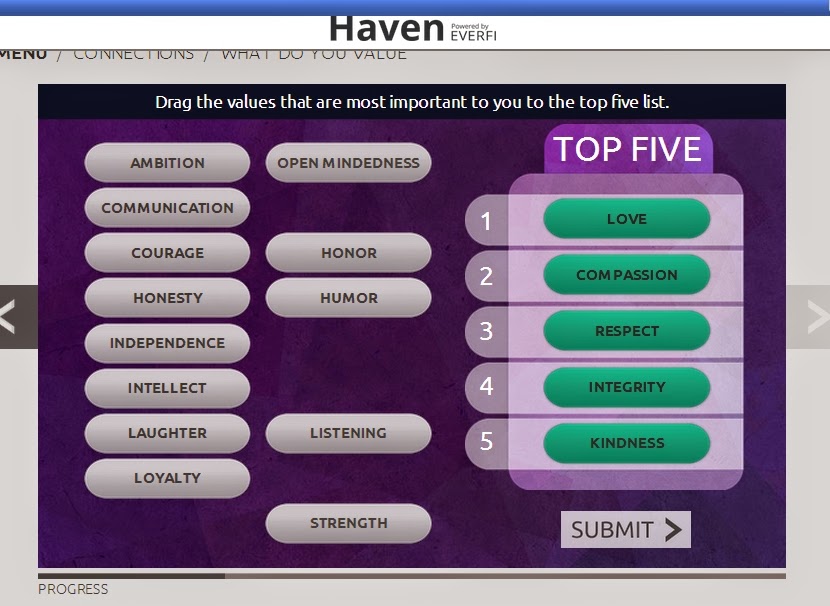
USU makes all their students take this little interactive online course. I was pretty captivated by this screen. As you can see, I'm a Hufflepuff:
Yes, that's definitely my top value set.
Which would you choose?
* * *
All of my adult life, I've been telling people I was 5'11". A couple of weeks ago, a wellness screener told me I was six feet tall. I didn't believe her. She made me step out from under the bar and look.
Seventy-two inches on the dot.
What the ... When did I grow another inch? Has it stopped?!
* * *
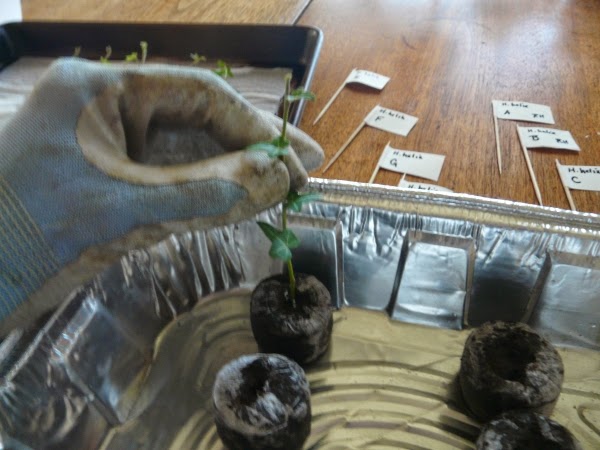
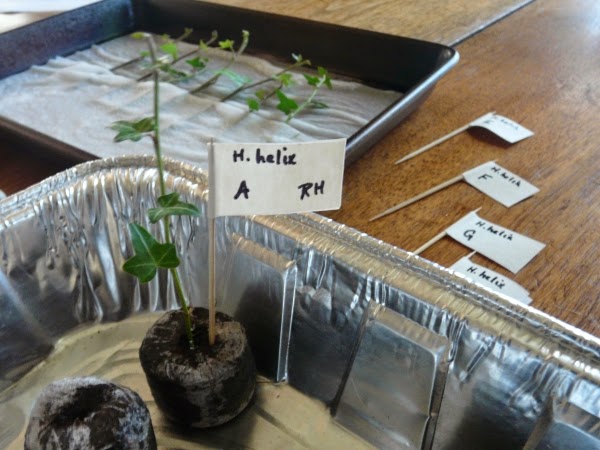
Science class! I feel a little guilty propagating something that is apparently a noxious weed in both Washington and Oregon (English ivy), but I needed loads of something easy to propagate, and this is what I had loads of. If these take root, I'll put them on my desk at work.
They're completely adorable so far. I'm kind of proud of the little things.
* * *
O look, look in the mirror O look in your distress: Life remains a blessing Although you cannot bless.
* * *
This may not interest anyone except me, in which case you can all scroll past it, but I have been reading Mudblood Catholic's (Gabriel Blanchard) "Why I Am a Catholic" series (Part I here) hungrily, and when I say I cried over a blog post this week, it was his "Why I Am a Catholic, Part III: Apostate":
For it is the whole point of the book of Job that God, when He confronts both Job and Job's comforters, offers no answer, no explanation. He gives no account of Himself. As Charles Williams points out in He Came Down From Heaven, God's reply mostly only plagiarizes things Job has already said in his storm of accusation directed upwards. There is no theodicy offered there.
Or rather, there is; it is that offered by Job's friends.
I don't talk much, either on this blog or with anyone except for a few dependable friends, about how hard faith comes for me. But keeping inner realities secret also comes hard for me, and Gabriel has spoken into some of my deepest experiences of this year.
As an agnostic who chooses to believe, by definition I am someone who has not been able to reason herself into firm conviction. The one apologetic that helps, lately, is the one that comes with its own uncertainty—the one that takes into account that the idea of suffering eternally for finite failures cannot, by any standard we know of, be characterized as justice; the one that recognizes that for some of us, Christian strictures turn out to be more severe than most of us would be able to bear; the one that sees the dark and complicated and horrifying sides of Scripture as clearly as its comforts, and knows that even today, tradition brings both beauty and cruelty into the world.
The apologetic that shows the cracks from bearing the weight of those questions, and that still can find no solution to life but to believe in Jesus, is the one apologetic that speaks to me of God in words I can comprehend.
I have no satisfying answers to these conundrums, and nothing but sympathy for those who find them too much for faith. Meanwhile, when I pray the Jesus prayer, I lean on the word mercy, and I pray it for all of us. But maybe the fact that I feel those cracks in my own soul, and yet have no other solution, and can sometimes still hear those words—maybe that means I'm more of a believer than I realize.
* * *
In a Facebook conversation with a friend recently, I recommended John Green's Looking for Alaska, which is where I originally met this poem; the bulk of Green's story is bookended by a single punch-packing couplet. The poem speaks less directly to me in its cynicism about love than it does in its darkly realistic vision of the brokenness of life, but this couplet is the redemption of both. It's a way for me, with all the bends and breaks in my soul, to move forward.
You shall love your crooked neighbor With your crooked heart.
* * *
Back to good cheer, for those of you who made it this far! Favorite comment I've gotten all week from anybody: "Just what is a Hufflepuff?"
on account of being too creeped out in empty house to go to sleep, stay up till two a.m. reading a novel about ninjas
watch a bunch of school orientation stuff
practice the heck out of a couple of musical instruments:
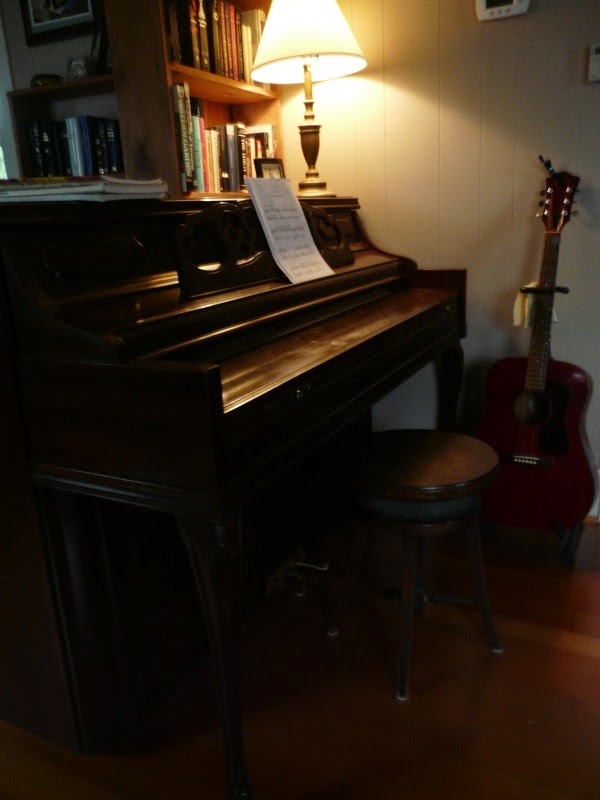
Our friends left town and bequeathed us their piano.
I shot out my voice last night singing Evanescence to my own
accompaniment. It was thoroughly enjoyable.
give t'ai chi a try, with coaching provided by YouTube
do a week's worth of housecleaning
clean out the refrigerator
trim bangs and take selfies with Dante, Dostoevsky, Paolini, and Debussy:
Also, the corner of the piano.
Did I mention that I love this piano?
accidentally lock the priest out of the parish office (sorry, Father! I don't know what I did to the door...)
contemplate cleaning old clothes out of dresser drawers
contemplate the meaning of life (42) and sanity (the number's probably somewhere in the same range)
contemplate labels, goals, and other forms of life organization
spontaneously spend an evening listening to Nikki Yanofsky with birthday-girl sister and her family
do the laundry
listen to Enya, because seriously, Enya
listen to random CD bought off random guy on street corner during Lent because he "wanted to have a voice"
get a hard lemonade and a pint of chocolate gelato and start in on Buffy, the Vampire Slayer
procrastinate on nearly all of the above by blogging
contribute to the internet's ever-insatiable need for cat pictures:
I miss Lou a lot, but at least I'm not bored. Cheers, everybody! I miss you, too....
For when the heart goes before, like a lamp, and illumines the pathway, Many things are made clear, that else lie hidden in darkness.
—Longfellow, Evangeline
* * *
A month's absence from the blog wasn't in the plans. Neither was the sheer volume of comment spam I've gotten on my last post, none of which should have reached the internet or you... unless you happened to be subscribed to comments, in which case, I'm so sorry.
Meanwhile, Min and I have been getting acquainted and liking each other very much indeed. She's friendly with my camera card, which helps. Brace yourselves. I've got a month's backlog of spring pictures coming your way.
* * *
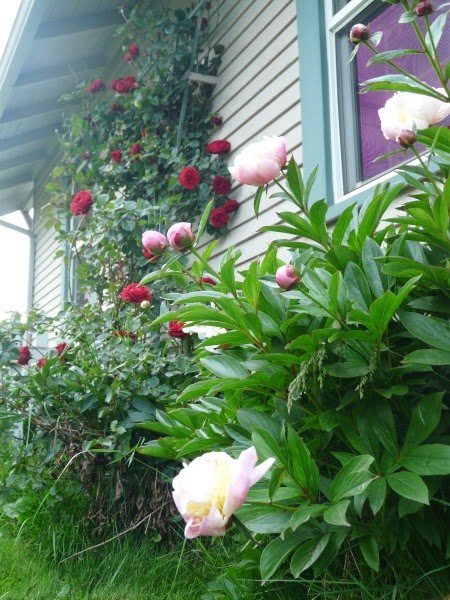
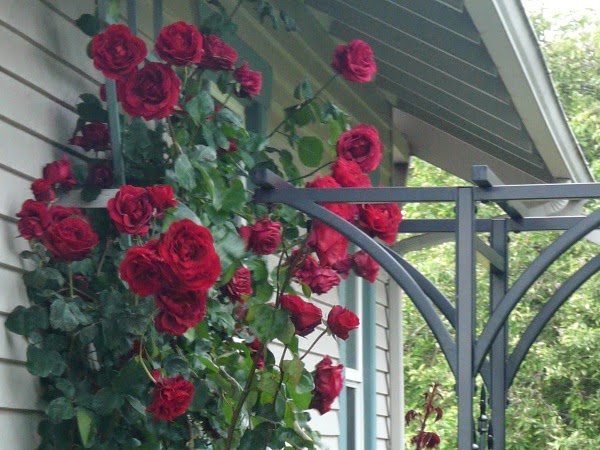
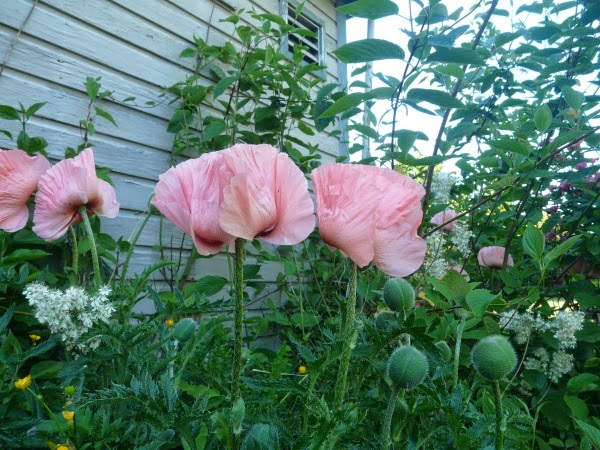
One of the glories of this spring: the Don Juan climbing rose, which this year has recovered in great style from being treated like a Mr. Lincoln by mistake two winters ago. (The latter are hybrid teas, and like to be pruned way back in the winter. Climbers, not so much.)
It's hard to make the photos do it justice, especially since I haven't had time to do much better than snapshots.
* * *
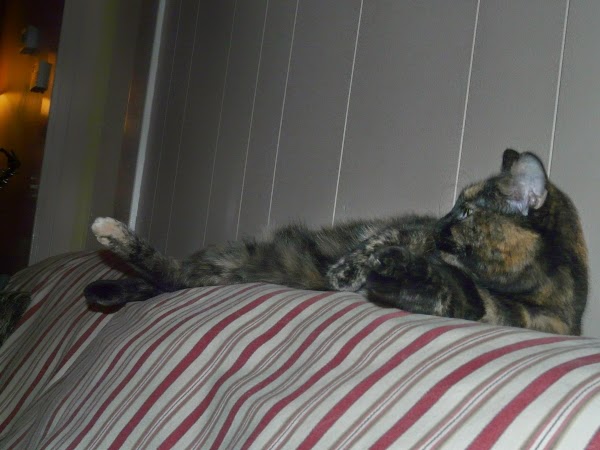
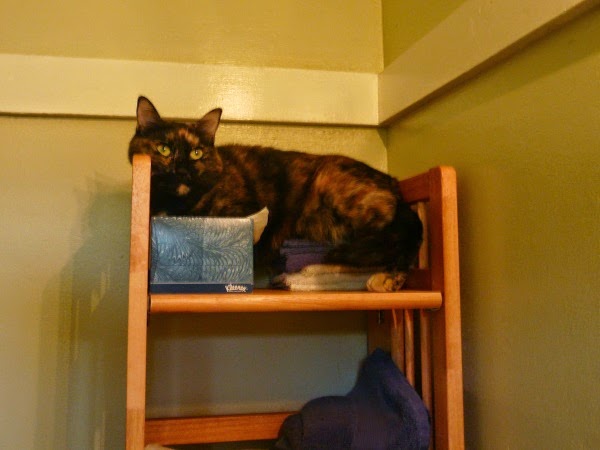
Obligatory cat picture.
Why, yes, Maia is sleeping in a Kleenex box. It can't be comfortable.
* * *
Music of the week: My friend Fred is in a music video! He's the first person you see, the star of the frame narrative. Isn't he debonair? I love Fred. He always greets me with superlatives and a hug. You're stupendously marvelous, Fred. <3
Parents, you may want to watch this without any small fry to whom you are not yet prepared to explain the birds and the bees and lacy lingerie. FYI. Cool song and sweet video, though.
* * *
While listening to the radio in the car this weekend:
Me: "How did someone who sings like this ever get a job as a recording artist?"
Lou: “That’s Bob Dylan.”
Me: “Oh, well, I guess that explains it…”
...but it doesn't!
If I hadn't grown up almost entirely ignorant of pop culture and all relevant contexts, would I have understood?
"To know what would have happened, child?" said Aslan.... "Nobody is ever told that."
* * *
Sunday afternoon I finished a work begun in, if memory holds true, sixth grade: that of reading Longfellow's Evangeline.
The ending made me cry, as I pulled myself away from "the wail of the forest" and back into the late afternoon sun in my own peaceful little yard. But the poetry was astoundingly beautiful, and some of the thoughts haunt me—a friendly haunting, usually, like the quote above, though there’s also being shadowed by a spirit of fury. Why is the world so sad and full of suffering? I'm not sure I'll ever understand.
* * *
That thought doesn't just come to mind when reading tragic literature. I thought about it for ten minutes straight the other night, while enduring a particularly impressive foot cramp. It was a much less poetic experience.
* * *
There’s a scene from the WWU performance of the Britten opera that, like Evangeline, has gone on haunting me. Late in the story, the fairies held a dance, contorting in wild and unstructured forms—and in the middle of them, in an act of choreographic brilliance, a single ballerina was spinning in place, in arabesque position. Demi-pointe, double turn. Demi-pointe, double turn. Demi-pointe, double turn, over and over and over again. She was placed on one of the dynamic points of the scene, spinning mindlessly, with all those fairies twisting around her. The effect was thrilling and profoundly unnerving.
I find myself referencing that image in thinking through life over the last few months. Everything changed at once: rhythm and routine, ideas and ideals, dreams and goals. Rites of thought, writing, and prayer—my usual ties to sanity—all snapped off like frayed kite strings, ends fluttering in the breeze. It's felt like the world has spun, writhing and morphing, around me—like perhaps I wandered into that fairy-dance as a human and found myself spinning, too, involuntarily and with abandon.
Masha and Christie have me retreating with them for a few weeks, seeking prayer, bringing in flowers for saints, and organizing thought processes into words and meaningful visions. It's apparently working, since I'm sane and settled enough to blog tonight.
Of course, one doesn't dance in the wildwood and go home unchanged. That, however, is as it should be.
* * *
You wouldn't think an ice cream labeled "Death by Chocolate" could be improved by pouring massive amounts of chocolate sauce on it.
Turns out, it can. Kathryn! I might need your grandma's recipe, if it be not secret. It's amazing.
* * *
Speaking of deliciousness: the nectar of the gods.
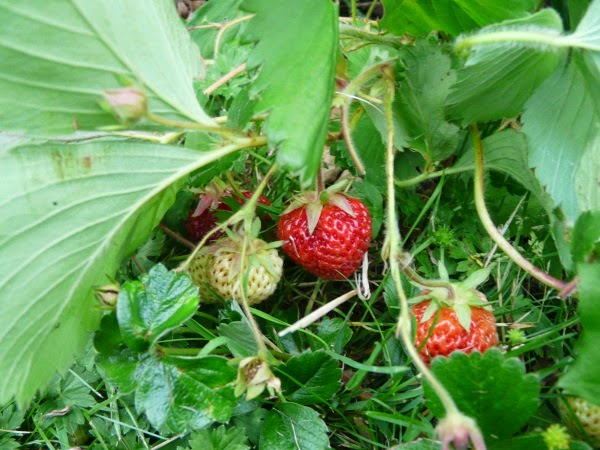
I'm pretty sure the only flavor to rival home-ripened strawberries
is fresh-squeezed orange juice from home-ripened oranges,
which, unfortunately, don't grow in Washington.
To be fair, neither do alligators and cockroaches.
* * *
Two rather dear young friends have passed me up in height this spring:
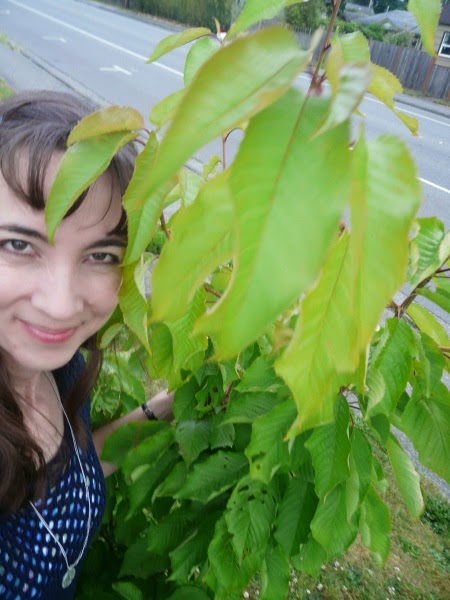
Cherry tree
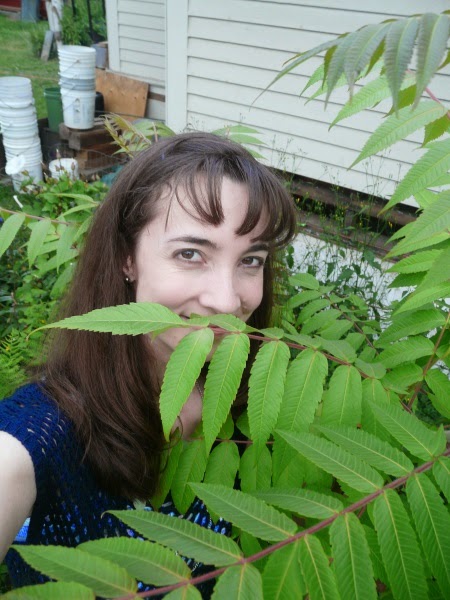
Sumac
I believe Seth thinks I'm nuts for planting this tree,
and maybe I will agree in a decade when I have dozens,
but so far, I love the beautiful little thing.
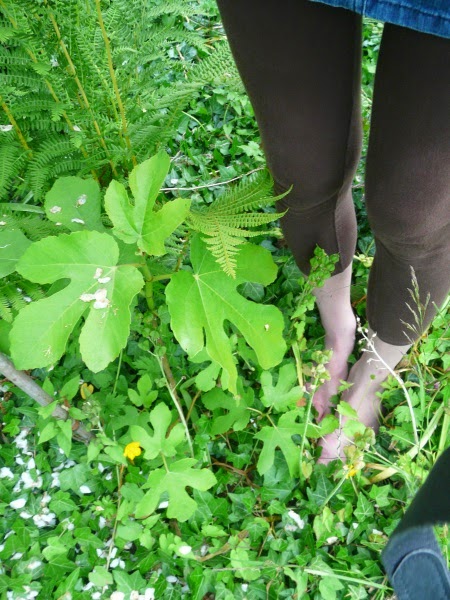
The fig trees are still working on that goal. Grow, grow, grow, little figs!
You can do it!
* * *
In other news: I am registered for my first classes—English 2010 and Introduction to Horticulture, the latter of which is a Breadth Life Sciences requirement that looked particularly life-applicable. I still need to register for Spanish, which USU is kindly letting me take from the University of Idaho since they offer only Italian online. (Italian: very beautiful, but not very useful in the Pacific Northwest.)
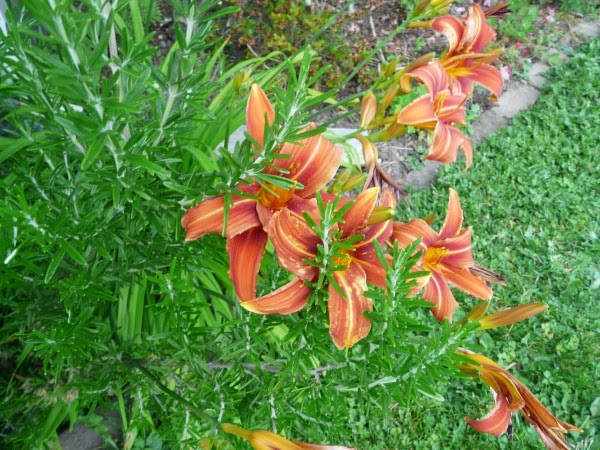
I like my job, and am addicted to the free coffee. I love both my piano teacher and my priest oh-so-much this week, both of them for extending lots of sympathy and mercy to exhausted and overwrought little Jennifer, on account of which, I am working very hard at this Bach inventio and at all the Christ-imitating Father asked me to do. I knew we had day lilies and rosemary in the garden, but the iris came as a surprise.
Blogging promises seem to be difficult to keep just now, but I'm not planning on abandoning this beloved little place. For today—I hope you're all well and enjoying summer!